Your Emotions Are Not A Weakness
Published on May 21, 2026 • 4 min read
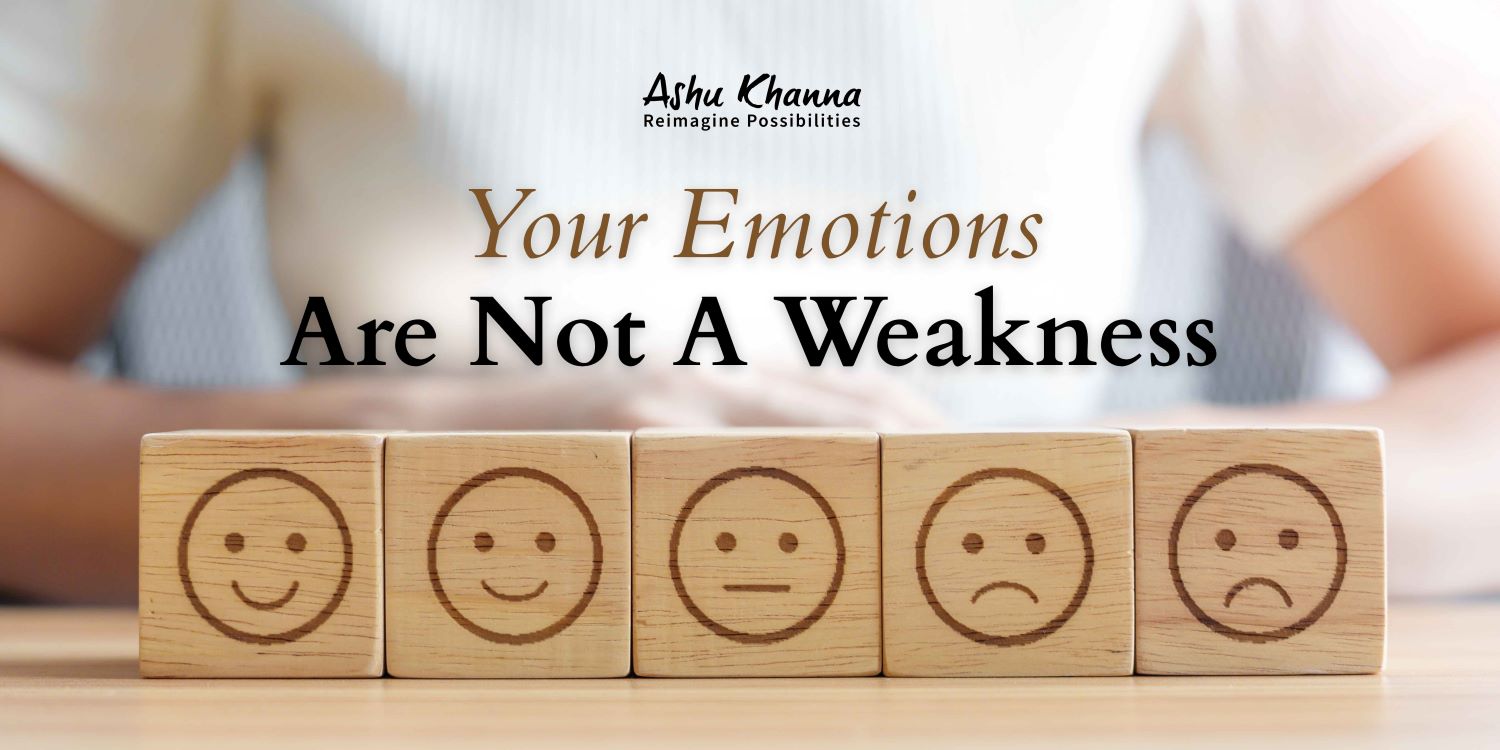
Did you know that your emotions are the most sophisticated data system present within you?
There was a time in my life when I believed being a strong leader meant staying composed no matter what was happening inside me. I had acquired a persona where I could walk into strategy meetings carrying anxiety (that I had not acknowledged even to myself) and still appear calm. I could support teams, make decisions, and continue functioning while internally feeling exhausted, disconnected, and emotionally overwhelmed. Like many leaders, I learnt very early how to keep moving without ever pausing long enough to ask myself what I was actually feeling.
For years, I thought that was maturity. Only to later realise that I had become adept at pretending, denying and suppressing myself. Angry with how patterns of events kept repeating, one day, I turned the anger inside to ask myself 'Why?"… that one question shifted my perspective because I discovered the power of the inner voice. From thereon, I stopped seeing emotions as interruptions to leadership and started understanding them as information. Not noise. Not weakness. Information!
EMOTIONS ARE DATA
Why does leadership training so rarely prepare leaders to understand their own emotional patterns?
Most leaders are trained to sharpen their intellect. Very few are taught how to understand their inner world. Self awareness is given less significance compared to grades and results. Yet, underneath every overreaction, every hesitation, every need for validation, every inability to disconnect from work, there is usually an emotional pattern that needs to be understood. The day you start treating them as information instead of inconvenience is the day true leadership begins.
The ancient Vedic understanding of the mind describes this reactive emotional layer as Manas. It is the part of us that constantly interprets reality through memory, perception, fear, conditioning, and past experiences. When left unexamined, these patterns quietly begin driving our decisions, our relationships, and our leadership without us even realising it. What appears externally as logic is often deeply influenced by emotional history.
OLD PATTERNS LINGER
Why do high-performing leaders still struggle with self-doubt and exhaustion despite being capable and successful?
I saw this clearly in myself. As a child, I was deeply sensitive. I absorbed everything around me. A passing remark about my ability or worth could stay with me for days. Over time, I unknowingly built internal narratives around not being enough, needing approval, and proving myself. Those patterns did not disappear when I became successful. They simply became more normalised.
Many high-performing leaders carry similar emotional conditioning into boardrooms, businesses, and relationships. This is often why intelligent, capable people still struggle with self-doubt, people-pleasing, overthinking, perfectionism, or emotional exhaustion. The challenge is rarely capability. More often, it is unprocessed emotional patterns continuing to shape behaviour beneath the surface.
We spend years trying to manage the visible symptoms without inquiring into the source or triggers. What changed my leadership was not becoming less emotional. It was becoming more aware of what my emotions were trying to tell me. There is a difference between reacting from emotions and listening to it. Emotions are the most beautiful gift that allow us to experience every facet of life.
THE INNER VOICE
What happens when a leader repeatedly ignores their inner voice in favour of external validation?
The leaders I have worked with over the years, whether entrepreneurs, founders, or senior executives, often arrive believing they need better performance strategies, greater clarity, or sharper decision-making. What they eventually discover is that sustainable clarity comes from inner alignment.
When leaders take a pause and accept their emotions, they begin reconnecting with their inner voice. The inner voice is not dramatic or loud. It is subtle, steady, and deeply honest. It often appears before logic catches up. It tells us when something is misaligned, when a decision is being driven by fear, or when we are abandoning ourselves to maintain an image.
Most people override it repeatedly because they have been taught to trust external validation more than internal knowing. Every time we ignore that voice, something within us disconnects a little further.
Over time, that disconnection begins to show up everywhere. In the way we lead teams. In the way we communicate. In our inability to rest. In the pressure we carry silently. In the growing gap between external success and internal peace.
LEAD FROM WITHIN
What does authentic leadership truly look like when it is rooted in self-awareness rather than performance?
This is why emotional mastery in leadership is not about controlling emotions. It is about understanding them with honesty and awareness. It is about recognising which emotions belong to the present moment and which belong to old conditioning that is still asking to be resolved.
Once you begin doing that inner work, you become less reactive. Less judgmental. More present. You start embracing the wholeness and oneness of the world. You become curious about what has remained unspoken in the room. Your leadership gains depth because your awareness gains depth.
I think many leaders today are not lacking intelligence, ambition, or capability. What they are lacking is space. Space to pause. Space to listen inwardly. Space to reconnect with themselves beneath the constant pressure to perform.
Authentic leadership truly begins by not learning how to appear stronger. True strength lies in developing the courage to understand and accept yourself honestly enough that your leadership arises from a deeper sense of clarity, awareness, and inner alignment.
Sometimes the emotions we keep trying to silence are simply asking us to finally pay attention. Often, the moment a leader stops fearing and running from what they feel and starts listening internally, clarity begins to emerge. The inner clarity changes how we make decisions, how we navigate uncertainty, how we build relationships, and ultimately, how we lead.
Authentic leadership is not built only through strategy or achievement. It is built through self-awareness, inner alignment, and the courage to understand yourself deeply enough to lead without constantly abandoning who you are.
If this resonates with where you are in your own leadership journey, perhaps the next step is not to push harder externally, but to pause long enough to listen inwardly. Notice one emotion today that you have been pushing away, minimising, or intellectualising. Do not judge it. Do not fix it. Just name it. Sit with it for a few minutes and ask, what is this trying to tell me?