The Cost Of Performing Leadership
Published on Aug 31, 2026 • 5 min read
In a freak accident, in 2001, I was stung by nearly a hundred bees outside my home in Singapore. I spent two days in intensive care. Lying in that hospital bed, connected to monitors, I was stripped of every role and title and responsibility. Suddenly I came face to face with a question I had been avoiding for years. Who am I? What is the purpose of my existence?
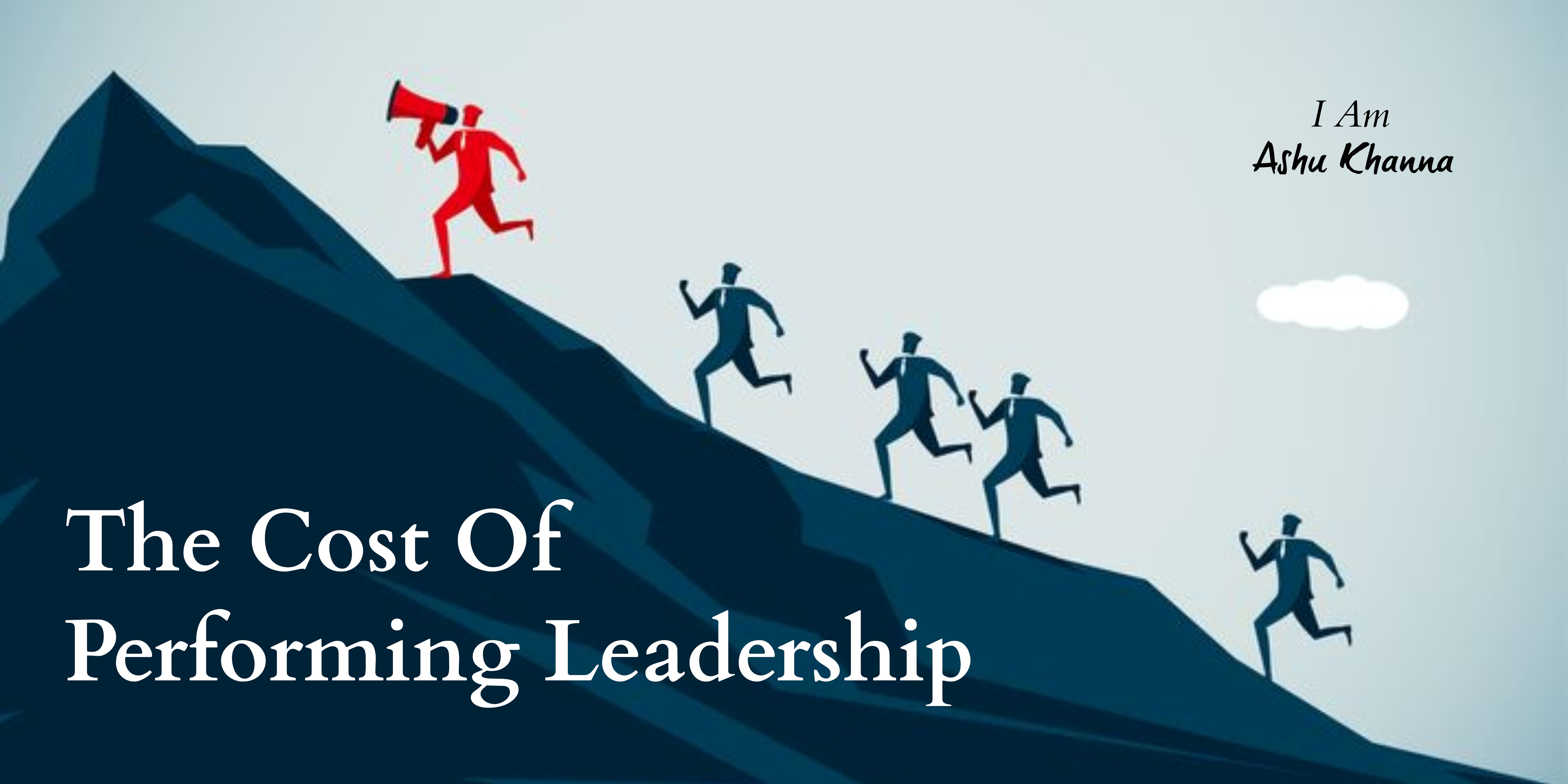
I had built a normal and regular life. I had moved countries, built a career, raised children, and worked in India, Singapore and Hong Kong. Externally, I had it all together. I appeared competent, happy and capable. On the inside, I was a child who still wanted to feel accepted, heard, and safe, and who had decided, at some point, that showing that need was the most dangerous thing she could do. That is the leadership persona trap. The irony is that others can see and sense the mask, only we remain unaware of it because it becomes our reality.
We learn early, from families, from schools, from the cultures and industries we enter, that vulnerability is a liability. That emotions are indulgences. That to be taken seriously, to earn authority, to be trusted with complexity, we must appear unshakeable. So we pretend to be confident, certain and composed and hide those million fluttering butterflies. The cost of that split personality is enormous.. It seeps into every team you lead, every relationship you build, the culture of the organisation. People cannot feel safe being real with a leader who is not authentic. They sense the gap between the polished exterior and the guarded interior, even if they cannot name it, and they match your inauthenticity with their own. The entire system becomes inauthentic, and everyone wonders why meaningful change feels so hard.
You cannot ask people to be authentic if you are hiding from your own truth, and you cannot build inner alignment in a team if you are out of alignment with yourself. The gap between your persona and who you actually are, is the same gap between your leadership and your potential. .
The bee sting incident was the second time I had come face to face with the fragility of life. The first was in Hong Kong, a severe allergic reaction that I filed away as a random occurrence and moved on from quickly. A hundred bee stings in an ICU could not be filed away that easily. This incident forced me to inquire into my happiness and relationship with the world. The answer, when I was honest enough to look at it, was my life had been shaped by fear. Fear of being misunderstood. Fear of failure. Fear that if people saw the full complexity of who I was, sensitive, ambitious, emotional, searching, they would find it unacceptable. So I edited and revealed a version of myself that I believed was more acceptable, more leaderly, more safe. Funnily, what I discovered on the other side of that performance, was that my actual self was a far more effective leader. More present, more decisive, more connected to the people around me, not because I was more impressive, but because I was more real.
Authentic leadership is not about being emotionally open in every meeting or sharing your inner life. . It is about the ongoing commitment to knowing yourself, your fears, your patterns, your values, and making aligned choices.. When I made that commitment to be authentic, it gave a freedom to simply be, and to lead from who I actually was rather than who I believed I needed to be.
The real work of an authentic leadership coach is the ongoing practice of closing the gap between who you think you need to be and who you actually are. It is not a destination. It is a direction. Some weeks you will move towards it clearly, and other weeks you will catch yourself mid-performance and have to choose, in real time, whether to continue or to shift. Both are part of it, and what matters is choosing with awareness rather than running on autopilot.
Self realisation is not a spiritual luxury reserved for retreats and meditation cushions. It is a leadership necessity. As a leader who has built a strong external life while quietly managing a significant internal one, the work you have done to get here, the resilience you built, even in the fortress, and the skills you developed, even behind the armour, do not disappear when you choose authenticity. They become available to you as compassion, agility, and wisdom.
Every moment can be a moment of transformation, if you look within and ask yourself, who am I being right now, and what is it costing me, and the people you lead, to keep it going?